Study in Canada for Pakistani Students – Admission Requirements, Scholarships & Work Opportunities
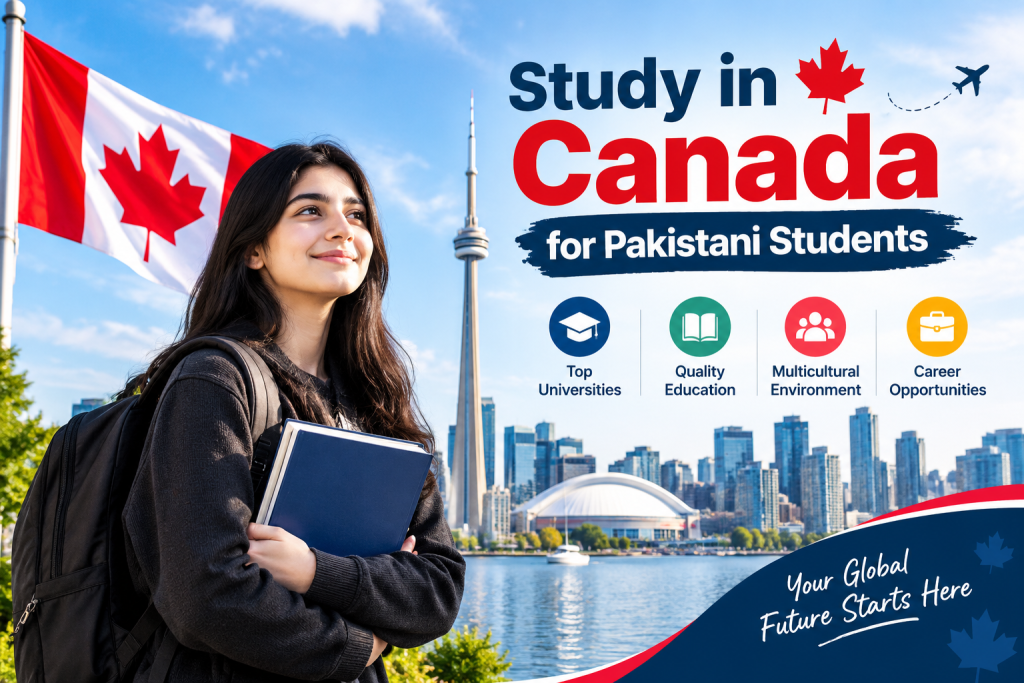
Study in Canada for Pakistani Students is one of the most popular destinations for international students who want to receive a quality education and build a successful career abroad. Every year, students from Pakistan choose Canadian colleges and universities because of their internationally recognized qualifications, multicultural environment, modern teaching facilities, and career opportunities.
For Pakistani students, studying in Canada can provide an opportunity to experience a different education system, improve English language skills, and gain international exposure. Canadian institutions offer undergraduate, postgraduate, diploma, and doctoral programs in various academic fields, including business, engineering, computer science, healthcare, and social sciences.
However, before applying, students should understand the admission requirements, tuition fees, scholarships, English language requirements, and Canadian study permit process.
This guide by TheReader.edu.pk explains the important things Pakistani students should know before planning their education in Canada.
Benefits of Studying in Canada for Pakistani Students
Canada offers several educational and personal benefits to international students. Its universities focus on academic development, practical learning, research, and professional skills. Some of the major reasons Pakistani students consider Canada for higher education are discussed below.
1. Quality Education and Internationally Recognized Degrees
Canadian universities and colleges are known for their academic standards, modern teaching methods, and research facilities. Students can choose from a wide range of programs according to their academic interests and future career goals.
A Canadian qualification can help graduates explore employment opportunities in different countries. Many institutions also provide practical training, internships, laboratory facilities, and industry-related projects to prepare students for professional careers.Courses in Pakistan
2. Multicultural Learning Environmenthttps:
One of the biggest advantages of studying in Canada is its multicultural environment. Students from different countries, religions, ethnic backgrounds, and cultures study together in Canadian educational institutions.
Pakistani students can interact with classmates from Asia, Europe, Africa, and other regions. This cultural diversity helps students develop communication skills, understand different perspectives, and build international friendships.
Universities also arrange cultural events, student activities, and social programs where international students can participate and share their traditions.
3. International Student Support Services
Canadian colleges and universities provide different support facilities to help international students adjust to their new academic and social environments.
These facilities may include:
- International student offices for admission and enrollment guidance.
- Academic counselling and career development services.
- English language support and writing assistance.
- Accommodation guidance and student housing information.
- Health and wellness support services.
- Student clubs, sports activities, and cultural organizations.
These services can make the transition from Pakistan to Canada easier, particularly for students who are living abroad for the first time.
4. Study in Canada Without IELTS
IELTS is a commonly accepted English language proficiency test for international admissions. However, it is not the only option available to Pakistani students.
Some Canadian universities and colleges accept alternative English language tests, such as:
- TOEFL iBT
- PTE Academic
- Duolingo English Test
- Cambridge English qualifications
Certain institutions may also consider previous education in English as evidence of language proficiency or offer their own English language assessment.
However, students should remember that admission policies differ between universities and programs. A university that offers admission without IELTS does not automatically guarantee that every program or study permit application will have the same exemption.
Always check the official admission requirements of your selected institution before submitting an application.
5. Scholarships and Financial Assistance in Canada
The cost of international education can be a major concern for Pakistani students. Canadian institutions offer different scholarships, awards, and financial assistance programs to eligible international applicants.
Depending on the institution and scholarship, financial support may cover part of the tuition fee, a specific academic award, or a larger portion of educational expenses.
Students can explore the following opportunities:
- University entrance scholarships.
- Merit-based scholarships.
- Research funding for postgraduate students.
- Departmental awards.
- Graduate teaching and research assistantships.
- External scholarships offered by educational organizations.
Some scholarships are awarded automatically during the admission process, while others require a separate application.
Students should visit their selected university’s official scholarship page to check eligibility, application deadlines, and available funding.
Important: Fully funded education is competitive and is not available to every applicant. Pakistani students should prepare a realistic financial plan instead of depending entirely on scholarships.BSIT in Pakistan
6. Part-Time Work Opportunities for International Students
International students in Canada may have an opportunity to work while completing their studies, provided they meet the conditions of their study permits.
Eligible students can work off campus for up to 24 hours per week during regular academic sessions. They may also work unlimited hours during scheduled academic breaks, provided they meet the relevant immigration requirements.
Part-time employment can help students gain professional experience, improve communication skills, and manage some personal expenses.
However, students should understand that part-time employment is not a substitute for the financial resources required for a Canadian study permit. Applicants must demonstrate that they can afford their education and living expenses without depending on future employment income.
Canadian Universities Admission Criteria for Pakistani Students
After selecting Canada as a study destination, the next important step is understanding the admission process.
Canadian universities and colleges offer undergraduate, graduate, diploma, certificate, and doctoral programs in various academic disciplines. Admission requirements depend on the institution, selected program, academic background, and level of education.
Pakistani students should carefully review the eligibility criteria before applying to any Canadian institution.
Undergraduate Programs in Canada for Pakistani Students
Undergraduate education in Canada includes bachelor’s degree programs and other post-secondary qualifications.
Most bachelor’s degree programs take three to four years to complete, depending on the university, subject, and program structure.
Students who have completed their Intermediate, FA, FSc, ICS, ICom, or an equivalent qualification from Pakistan can explore undergraduate admission opportunities.
Popular undergraduate study areas include:
- Computer Science and Information Technology.
- Business Administration and Management.
- Mechanical and Electrical Engineering.
- Civil Engineering.
- Nursing and Health Sciences.
- Accounting and Finance.
- Psychology and Social Sciences.
- Environmental Sciences.
Some universities may require specific subjects or minimum grades for particular programs. For example, engineering and science degrees may require mathematics, physics, or other relevant subjects.
Graduate Programs in Canada for Pakistani Students
Students who have completed a bachelor’s degree can apply for postgraduate education in Canada.
Most master’s degree programs take approximately one to two years, although some professional, research-based, and specialized programs may have different durations.
Popular postgraduate options include:
- Master of Business Administration (MBA).
- Master of Computer Science.
- Master of Engineering.
- Master of Public Health.
- Master of Finance.
- Master of Data Science.
- Master of Education.
- Master of Social Sciences.
Universities may consider academic performance, relevant undergraduate qualifications, English proficiency, professional experience, and other program-specific requirements.
Some postgraduate programs also require a statement of purpose, recommendation letters, a research proposal, or an interview.
PhD and Research Programs in Canada
Canadian universities provide doctoral and research-based programs for students interested in advanced academic study and professional research careers.
A PhD program commonly takes three to five years or longer, depending on the research area, university, and progress of the candidate.
Pakistani students interested in doctoral studies should prepare a strong academic profile and identify research areas that match their interests.
Typical admission requirements may include:
- A relevant master’s degree or equivalent qualification.
- Strong academic transcripts.
- A research proposal or statement of research interests.
- Academic recommendation letters.
- Proof of English language proficiency.
- A detailed academic CV.
- Previous research publications or experience, where required.
- Acceptance or supervision from a faculty member, if required by the university.
Some universities offer research funding, graduate assistantships, and scholarships to eligible doctoral students.
Admission Requirements for Canadian Universities for Pakistani Students
Admission requirements vary from one institution to another. A student applying for an undergraduate degree may have different requirements from someone applying for a master’s or PhD program.
The following table provides a general overview of the documents and qualifications Pakistani students may need.
| Admission Requirements | Undergraduate Programs | Postgraduate Programs | Doctoral Programs |
|---|---|---|---|
| Previous Education | Intermediate or equivalent 12 years of education | Relevant bachelor’s degree | Relevant master’s degree or equivalent |
| Academic Transcripts | Matric and Intermediate transcripts | Bachelor’s transcripts | Bachelor’s and master’s transcripts |
| Degree Certificates | Intermediate certificate | Bachelor’s degree certificate | Master’s degree certificate |
| English Proficiency | IELTS, TOEFL, PTE or accepted alternative | IELTS, TOEFL, PTE or accepted alternative | IELTS, TOEFL, PTE or accepted alternative |
| Application Form | Required | Required | Required |
| Academic CV | If requested | Usually required by many programs | Generally required |
| Statement of Purpose | If required | Commonly required | Required or research statement |
| Recommendation Letters | If requested | Usually one or more | Commonly two or more |
| Research Proposal | Usually not required | Required for some programs | Commonly required |
| Work Experience | Program dependent | Required for selected programs | Relevant experience may be beneficial |
1. Academic Qualification
Students must have the appropriate previous academic qualification for their selected program.
For undergraduate admission, Pakistani students generally need to complete Intermediate or an equivalent qualification. For postgraduate admission, a relevant bachelor’s degree is usually required.
Doctoral applicants generally need a relevant master’s qualification or another degree accepted by the university.
2. Academic Transcripts and Certificates
Students should prepare their academic documents before starting the application process.
These may include:
- Matriculation certificate and marks sheet.
- Intermediate certificate and marks sheet.
- Bachelor’s degree and transcripts.
- Master’s degree and transcripts, where applicable.
- Official English translations of documents, if required.
Some universities may request attested copies, verified documents, or direct academic records from previous institutions.
3. English Language Proficiency
International applicants whose previous education was not completed in an accepted English-language environment may need to submit an English language test result.
Commonly accepted tests include IELTS Academic, TOEFL iBT, and PTE Academic. Some universities also accept other recognized language assessments.
The required score depends on the university, degree level, and selected program.
4. Statement of Purpose or Letter of Intent
A statement of purpose explains why a student wants to study a particular subject and why they have selected a specific Canadian institution.
A strong statement should discuss:
- Academic background.
- Relevant skills and achievements.
- Reasons for selecting the program.
- Future educational and career goals.
- Reasons for choosing the institution.
Students should write their statements honestly and make sure the information matches their academic background.
5. Letters of Recommendation
Some universities require recommendation letters from previous teachers, professors, academic supervisors, or professional employers.
These letters help admission committees understand the applicant’s academic abilities, professional performance, research potential, and personal strengths.
The number and type of recommendation letters depend on the selected program.
6. Academic CV or Resume
A CV is particularly important for postgraduate and doctoral applicants.
It may include:
- Educational qualifications.
- Academic achievements.
- Research experience.
- Publications and projects.
- Employment history.
- Professional training and certifications.
- Relevant skills.
Students should keep their CV accurate, organized, and relevant to their selected program.
Canadian Study Permit Requirements for Pakistani Students
Getting admission from a Canadian institution does not automatically mean that a student can travel to Canada. International students generally need an approved study permit before beginning their studies.
Pakistani applicants should prepare their immigration documents carefully and follow the latest instructions issued by Immigration, Refugees and Citizenship Canada (IRCC).
Common study permit requirements include:
- A valid passport or travel document.
- A letter of acceptance from an eligible Designated Learning Institution (DLI).
- A Provincial or Territorial Attestation Letter (PAL/TAL), if required.
- Proof of sufficient financial resources.
- Academic documents and supporting records.
- English language test results, where applicable.
- Biometrics, if required.
- A letter of explanation or study plan.
- Medical examination or police certificates, if requested.
Students applying to study in Quebec may also need a Quebec Acceptance Certificate (CAQ).
Financial requirement: For study permit applications submitted on or after September 1, 2026, a single applicant studying outside Quebec generally needs to show CAD $23,448 for living expenses for one year, in addition to tuition fees and transportation costs. Requirements differ for applicants bringing family members and those studying in Quebec.
Students should check the latest official IRCC requirements before submitting their applications.
Can Pakistani Students Study in Canada After Matric?
Students who have completed Matric in Pakistan may explore secondary school education in Canada, subject to the admission policies of the school and the relevant immigration requirements.
However, students planning to pursue a bachelor’s degree generally need to complete the required secondary education equivalent to the Canadian university’s admission standard.
Some institutions may also offer pathway or preparatory programs for students who need additional academic preparation.
Students should contact the relevant institution to confirm whether their previous qualification meets the admission requirements.
Important Tips for Pakistani Students Applying to Canada
Before submitting an application, students should consider the following points:
- Choose a university or college that offers a program related to your previous education and future goals.
- Confirm that the institution is a Designated Learning Institution (DLI).
- Review the admission requirements for your selected intake.
- Prepare academic transcripts and certificates in advance.
- Check English language requirements directly with the institution.
- Search for scholarships before paying application fees.
- Prepare sufficient financial documents for the study permit application.
- Check whether a PAL/TAL is required.
- Avoid relying on unauthorized immigration or admission agents.
- Keep copies of all application documents and official correspondence.
Proper planning can help Pakistani students avoid unnecessary delays and make better decisions about their education in Canada.
Frequently Asked Questions (FAQs)
Can Pakistani students study in Canada without IELTS?
Yes, some Canadian universities and colleges accept alternatives to IELTS, such as TOEFL, PTE Academic, or Duolingo English Test. However, acceptance depends on the institution and selected program.
Can international students work while studying in Canada?
Eligible international students can work up to 24 hours per week off campus during regular academic sessions. They may work unlimited hours during scheduled academic breaks if they meet IRCC requirements.
Is education free in Canada for Pakistani students?
Canadian universities generally charge tuition fees to international students. However, Pakistani students may apply for scholarships, grants, and other financial assistance to reduce their educational expenses.
How many years does a bachelor’s degree take in Canada?
Most bachelor’s degree programs take approximately three to four years. The exact duration depends on the institution, subject, and program structure.
Can students apply for Canadian universities after Intermediate in Pakistan?
Yes. Students who have completed FA, FSc, ICS, ICom, or an equivalent qualification can apply for suitable undergraduate programs if they meet the university’s academic and language requirements.
Do Canadian universities offer scholarships to Pakistani students?
Yes. Many Canadian institutions provide entrance scholarships, merit-based awards, research funding, and other financial assistance to eligible international students.
Does admission to a Canadian university guarantee a study permit?
No. A university acceptance letter is only one part of the application. Students must also satisfy the applicable IRCC requirements, including financial, immigration, and documentation requirements.
Final Words
Studying in Canada can be a valuable opportunity for Pakistani students who want to receive an internationally recognized qualification and develop their academic and professional skills.
Canada offers a multicultural learning environment, a wide selection of educational programs, student support services, scholarship opportunities, and regulated part-time work options for eligible international students.
However, successful admission requires careful preparation. Students should compare universities, check their eligibility, understand the total cost of education, and prepare their study permit applications according to the latest official requirements.
For more admission guides, university information, scholarships, and study abroad resources, keep visiting TheReader.edu.pk.