Accounting and Finance Jobs in Pakistan – Career Opportunities, Skills and Qualifications
Accounting and Finance Jobs in Pakistan offer several career paths for students and graduates interested in mathematics, business management, financial planning, and data analysis. Depending on their qualifications and interests, candidates can explore opportunities in banks, private companies, government departments, accounting firms, and multinational organizations.
Students who are planning their education can also explore different courses and degree programs in Pakistan to understand which qualifications may suit their career goals.
In this guide, TheReader.edu.pk explains the accounting and finance jobs in pakistan salary and major career options, required skills, educational qualifications, and future growth opportunities in accounting and finance.
Career Opportunities in Accounting and Finance
Accounting and finance graduates can apply for different positions according to their education, experience, technical abilities, and professional interests. Some positions are suitable for fresh graduates, while others require specialized qualifications or several years of experience.
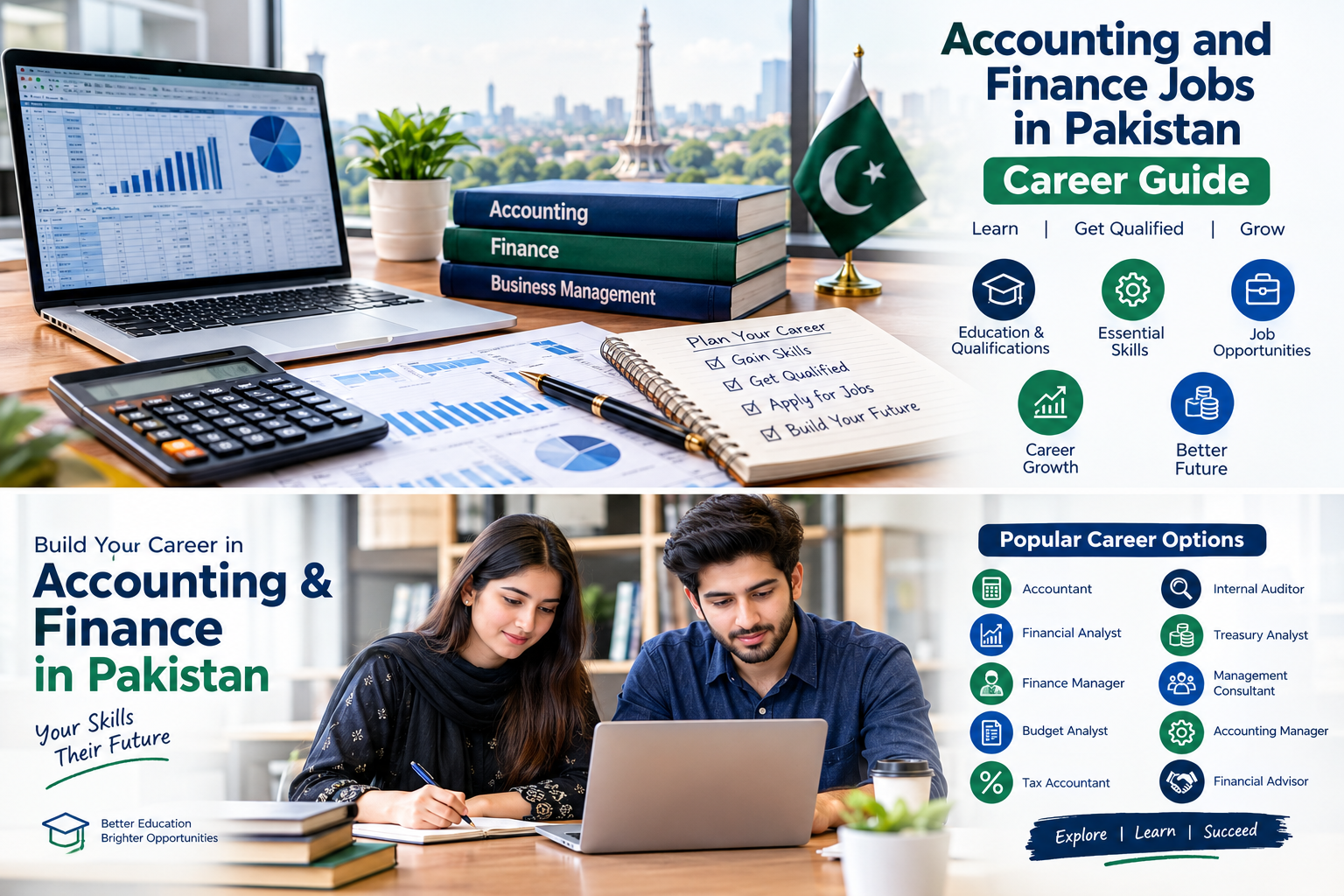
Common career options include:
- Accountant: Maintains financial records, prepares reports, and helps ensure that transactions are recorded accurately.
- Financial Analyst: Reviews financial information, evaluates business performance, and supports financial planning.
- Finance Manager: Oversees budgets, financial activities, and planning within an organization.
- Accounting Manager: Supervises accounting operations and helps ensure the accuracy of financial statements.
- Budget Analyst: Examines budget proposals, monitors spending, and identifies areas where costs can be managed.
- Treasury Analyst: Helps manage cash flow, liquidity, and financial risks.
- Tax Accountant: Assists individuals or businesses with tax calculations, documentation, and compliance.
- Financial Advisor: Helps clients understand financial planning, savings, and investment options within their area of expertise.
- Internal Auditor: Examines financial records and internal procedures to identify errors, risks, or control weaknesses.
- Management Consultant: Helps organizations improve business processes, financial performance, and operational efficiency.
The availability of these positions varies by employer, location, and market conditions. Candidates should review individual job advertisements to confirm the required qualifications and experience.
Accounts and Finance Jobs in Pakistan: What Do Professionals Do?
Accounting and Finance Jobs in Pakistan offer a wide range of career opportunities for students and graduates interested in business, financial management, and data analysis. Accounting focuses on recording financial transactions, preparing financial statements, and maintaining accurate financial records. Finance, on the other hand, involves managing money, preparing budgets, evaluating financial risks, and making informed financial decisions. Although accounting and finance are closely related, their daily responsibilities can differ. For example, an accountant may prepare financial statements and reconcile accounts, while a financial analyst may analyze financial reports, evaluate business performance, and forecast future financial results.
Professionals in both fields can work in sectors such as:
- Banking and financial services
- Manufacturing and industrial businesses
- Education and healthcare organizations
- Retail and e-commerce companies
- Government departments
- Nonprofit organizations
- Audit and consultancy firms
- International and multinational companies
Candidates should compare job descriptions carefully because the responsibilities of accounting and finance professionals can differ considerably between organizations.
Essential Skills for an Accounting and Finance Career
A relevant degree is important for many positions, but employers also look for practical skills. Developing these abilities can help candidates perform their responsibilities effectively and prepare for career advancement.
1. Accounting Knowledge
Accountants need to understand bookkeeping, financial reporting, reconciliations, budgeting, and applicable accounting standards. They should be able to maintain organized records and identify inconsistencies in financial transactions.
Knowledge of tax rules and regulatory requirements may also be necessary, depending on the position.
2. Analytical Thinking
Analytical skills help professionals interpret financial information, identify trends, investigate discrepancies, and solve business problems.
For example, a financial analyst may compare monthly expenses to identify unusual increases and help management understand the reasons behind them.
3. Computer and Technical Skills
Modern accounting and finance work often involves digital tools. Candidates can benefit from learning:
- Microsoft Excel and spreadsheet formulas
- Financial reporting software
- Accounting applications
- Data analysis and reporting tools
- Enterprise resource planning (ERP) systems
The software required depends on the employer. Candidates should prioritize the tools commonly mentioned in vacancies relevant to their career goals.
4. Communication Skills
Accounting and finance professionals frequently explain financial information to managers, clients, colleagues, and other stakeholders. remote accounting and finance jobs in pakistan
Clear written and verbal communication helps them prepare understandable reports, discuss financial findings, and explain complex information accurately.
5. Financial Management
Budget preparation, cash-flow management, financial planning, and risk assessment are useful skills for many finance-related roles.
Candidates interested in investment analysis or financial advising should also develop an understanding of investment principles, financial risks, and relevant regulations.
6. Attention to Detail and Time Management
Small errors in financial records can affect reports and business decisions. Professionals therefore need to check their work carefully, maintain organized documentation, and meet reporting deadlines.
Time management and problem-solving skills are especially useful when handling several assignments at once.
Educational Requirements for Accounting and Finance Jobs in Pakistan
The qualifications required for accounting and finance positions depend on the employer, job level, and nature of the work.
Bachelor’s Degree
A bachelor’s degree in accounting, finance, commerce, business administration, or a related subject can provide a foundation for entry-level positions.
Graduates may consider roles such as accounts assistant, junior accountant, finance assistant, or trainee analyst when they meet the employer’s requirements.
Master’s Degree
An MBA or a master’s degree in finance, accounting, or a related discipline may be useful for specialized roles and certain management positions.
However, a postgraduate degree does not automatically guarantee employment or promotion. Employers may also consider professional experience, technical skills, and relevant certifications.
Professional Qualifications
Candidates who want to specialize in accounting, auditing, taxation, or financial management may consider relevant professional qualifications.
Examples include CA, ACCA, and CMA pathways. Students should check the official requirements, eligibility criteria, examination structure, and recognition of each qualification before enrolling.
Internships and Practical Experience
Internships can help students understand workplace responsibilities and apply classroom knowledge to practical tasks.
Experience with financial reporting, bookkeeping, spreadsheets, reconciliations, and accounting software may strengthen a candidate’s application for relevant entry-level jobs.
Why Choose Accounting and Finance as a Career?
Accounting and finance can be suitable career choices for people who enjoy working with numbers, solving problems, organizing information, and understanding how businesses operate.
Some potential benefits include:
- Opportunities across industries: Many organizations require accounting, budgeting, or financial management services.
- Different specialization options: Candidates can focus on taxation, auditing, corporate finance, financial analysis, or management accounting.
- Professional development: Relevant training, experience, and qualifications can support progression into more advanced roles.
- Transferable skills: Financial reporting, analytical thinking, and budgeting are useful in many business environments.
- Business knowledge: Understanding financial records can help individuals evaluate business performance and make informed decisions.
- Entrepreneurial applications: Accounting knowledge can help business owners monitor expenses, plan budgets, and understand profitability.
Career outcomes depend on individual qualifications, practical ability, work experience, and the availability of suitable vacancies. Students should research their chosen specialization before making a long-term education decision.
Learning Outcomes in Accounting and Finance
Studying accounting and finance can help students develop knowledge and skills that are useful in business and organizational settings. bs accounting and finance jobs in pakistan salary
Depending on the program, graduates may learn how to:
- Record and interpret financial transactions.
- Prepare and understand financial statements.
- Analyze financial data and business performance.
- Develop budgets and evaluate expenditure.
- Understand business operations and financial decision-making.
- Identify financial risks and evaluate possible solutions.
- Use accounting software and spreadsheet tools.
- Communicate financial information through reports and presentations.
- Apply accounting principles and relevant professional standards.
The depth of these learning outcomes depends on the degree program, course content, and practical training available at the institution.
Career Growth in Accounting and Finance
Career progression usually depends on education, professional development, practical experience, and performance. A graduate may begin in an assistant or trainee position and gradually move into roles with greater responsibility.
A possible career pathway is:
Accounts Assistant → Accountant → Senior Accountant → Accounting Manager → Finance Manager
Another possible pathway is:
Finance Assistant → Financial Analyst → Senior Financial Analyst → Finance Manager
These are examples rather than guaranteed career sequences. Some professionals specialize in auditing, taxation, treasury management, financial planning, or consulting instead of following a management track.
Candidates can improve their prospects by building practical experience, learning relevant software, pursuing appropriate professional qualifications, and staying informed about changes in accounting standards and financial regulations.
Frequently Asked Questions (FAQs)
1. Is a degree in accounting or finance worth it?
An accounting or finance degree can be valuable for people interested in business, financial management, and analytical work. Its value depends on the quality of the program, the student’s skills, relevant experience, and the career opportunities available.
2. Can I become an accountant with a finance degree?
Yes, a finance graduate may qualify for certain accounting positions, depending on the employer’s requirements and the candidate’s knowledge of accounting principles. Some specialized positions require an accounting qualification or professional certification.
3. Is finance a good career option for the future?
Finance can offer opportunities in financial analysis, budgeting, banking, risk management, and corporate planning. Candidates should continue developing their technical and analytical skills to remain competitive as workplace tools and business requirements change.
4. What are the main career options after studying accounting and finance?
Common options include accountant, auditor, financial analyst, tax accountant, budget analyst, treasury analyst, and finance manager. The positions available to a candidate depend on qualifications and experience.
5. What are the top accounting jobs?
Popular accounting roles include financial accountant, management accountant, tax accountant, auditor, forensic accountant, and accounting manager. Their responsibilities and entry requirements vary.
6. Can fresh graduates apply for accounts jobs in Pakistan?
Yes. Fresh graduates can look for entry-level opportunities such as accounts assistant, trainee accountant, junior accountant, and finance assistant. Some employers prefer candidates with internships or practical software skills.
7. Which skills are important for finance jobs?
Important skills include analytical thinking, financial reporting, Excel, budgeting, communication, problem-solving, attention to detail, and an understanding of relevant accounting or financial regulations.
Final Thoughts
Accounting and finance offer a range of professional pathways for students and graduates in Pakistan. From maintaining financial records to analyzing business performance and managing budgets, professionals in these fields support important organizational decisions.
Before choosing a degree or applying for a vacancy, candidates should review the relevant qualifications, required skills, and job responsibilities. Building practical experience and continuing professional development can also help them prepare for long-term career growth.
For more educational guidance, degree information, and career-related resources, visit TheReader.edu.pk.